Click here to open this binder in a new window.
Wednesday, June 18, 2014

Sunday, June 8, 2014
Teacher Interivew: Lesson Planning
I had the opportunity to speak with two middle school teachers regarding their lesson planning process. Both of them have been educators for over 10 years so they are very comfortable with teacher and preparing lessons.
Questions & Answers:
1. How long before a lesson do you wait to plan it?
Based on my interview with these two teachers I can tell that a level of comfort develops after teaching for so long, however their process does still match the general framework of what we have learned during this module. I especially like how they both set up a frame work of what standards they need to cover for the year/semester and then use that to guide their specific lesson plans. They leave the details of lesson planning for a little closer to when they will be teaching so that they can base it on the progress or needs of their students. With building my two lesson plans I can tell that it may take multiple lessons for your students to reach and become proficient at an objective and especially a standard so I am sure once you are in the classroom your lessons will build on each other within the framework you set out for yourself. Both of these teachers teach at the same school so they do not have their lesson plans checked, but I know this will not be the case for all schools. I feel as a new teacher I would rather be over prepared than under prepared. I plan on creating a framework for the first semester and then detailed lesson plans a month ahead. With all of the information I need to teach down on paper I can then change things last minute, but if I choose not to I will be completely prepared. I will most likely come up with a system to review the lessons for a week at a time and make changes as I go. I would also like to create a system so that I can make note of the changes so if I teach the same grade again I will be able to look back on it. This interview also was a great example of one teacher having a partner to plan with and one on their own. It shows that you need to be prepared for either situation, however I am hopeful that I will have a team partner I can collaborate with. That would provide the ultimate differentiation for myself and my students! I feel that with these last two activities I have come up with a template that works for me. I am eager to be able to put it to the test during student teaching!
Questions & Answers:
1. How long before a lesson do you wait to plan it?
- Mrs. De Flores – I normally plan 2-3 weeks before a lesson depending on how much I need to do with my partner teacher
- Mrs. Whelan – It depends, sometimes I plan 9 weeks ahead and then sometimes I plan a day before. I typically create a 9 week shell and then put in details as I go so that my lesson plans match the progress of my class
- Mrs. De Flores — I have a road map for the year. I plan from it monthly
- Mrs. Whelan – I know what I am teaching for the semester (my class is a semester class) I plan specifically 1-2 weeks out
- Mrs. De Flores – I plan with my grade level partner teacher. We teach almost every lesson the same.
- Mrs. Whelan – I am the only teacher in my subject, so I plan on my own. I have the opportunity to plan with the other middle school health teachers on the general topics we plan to cover.
- Mrs. De Flores – I don’t use a specific template. I plan according to the lesson and whether it is a lab, a lecture, a project or a class discussion/activity
- Mrs. Whelan – I don’t use a template. I plan based on the what the lesson is going to teach and how it relates to the lesson before.
- Mrs. De Flores – our school doesn’t require teachers to show or turn in lesson plans. We are required to follow the road map and teach the lessons that support it.
- Mrs. Whelan – No, our school doesn’t check or require lesson plans.
- Mrs. De Flores – I meet with my grade level partner and we discuss our road maps, how are students are learning, and then create our lesson plans accordingly. We make sure we have spelled out how we are going to teach the lesson, the materials we need, and the time it will take.
- Mrs. Whelan – I look at what the objective of the lesson is and what the framework state and then I decide how I’m going to teach it so students are engaged.
Based on my interview with these two teachers I can tell that a level of comfort develops after teaching for so long, however their process does still match the general framework of what we have learned during this module. I especially like how they both set up a frame work of what standards they need to cover for the year/semester and then use that to guide their specific lesson plans. They leave the details of lesson planning for a little closer to when they will be teaching so that they can base it on the progress or needs of their students. With building my two lesson plans I can tell that it may take multiple lessons for your students to reach and become proficient at an objective and especially a standard so I am sure once you are in the classroom your lessons will build on each other within the framework you set out for yourself. Both of these teachers teach at the same school so they do not have their lesson plans checked, but I know this will not be the case for all schools. I feel as a new teacher I would rather be over prepared than under prepared. I plan on creating a framework for the first semester and then detailed lesson plans a month ahead. With all of the information I need to teach down on paper I can then change things last minute, but if I choose not to I will be completely prepared. I will most likely come up with a system to review the lessons for a week at a time and make changes as I go. I would also like to create a system so that I can make note of the changes so if I teach the same grade again I will be able to look back on it. This interview also was a great example of one teacher having a partner to plan with and one on their own. It shows that you need to be prepared for either situation, however I am hopeful that I will have a team partner I can collaborate with. That would provide the ultimate differentiation for myself and my students! I feel that with these last two activities I have come up with a template that works for me. I am eager to be able to put it to the test during student teaching!
Friday, May 16, 2014
How Do I Know What to Teach? A summary...
This unit was a great introduction into how important standards are for teaching and how we can use them to our advantage when lesson planning. I think each activity did a good job at guiding us to progressively break down standards and then formulating those pieces in a way we can use in the classroom. Standards are crucial to education. They help to make what students are learning at different ages uniform. This ensures that no matter where a child grows up (at least within the same state) they will receive the same knowledge at each grade level. This is especially important for children who move or transfer schools.
Here is a summary of what I learning this week:
Standards and Backward Mapping:
Beginning with the first activity, we learned to generally draw information out of a standard and how logical it is to use backwards mapping for lesson planning. It gives our lessons focus and helps us narrow down exactly what we want to see from our students. The process will eventually be (Example): (1) Find a Standard, (2) Unpack the standard (3) use that information to backwards map to Lesson Objectives, (4) create lesson plans, (5) teach!
Unpacking a Standard:
For this activity I think the most useful thing I learned was from Dan during our VC. If you can identify three parts within the standard it is easier to then put those parts back together in a simpler format. A great example is one we did in class:
Example Standard: Determine an author’s point of view or purpose in a text and analyze how an author uses rhetoric to advance that point of view or purpose.
- Verbs: Determine, Analyze
- Context: in a text
- Concepts: point of view, purpose, rhetoric
Unpacked:
1. Determine an author’s point of view in text.
2. Determine an author’s purpose in text.
3. Analyze how an author used rhetoric to advance that point of view in text.
4. Analyze how an author uses rhetoric to advance that purpose in text.
This technique really helped me to understand how to pull apart these standards so that we can work with them.
Lesson Objectives:
I feel that lesson objectives are the most important component to lesson planning and teaching in the classroom. These are like a bullseye for your lesson and standard; what you are aiming for. The most helpful resource I found for creating lesson objectives was a list of action verbs. By including those into the objective it helps to ensure that you create something that is measurable, which is one of the key components of an objective! It is important to use the unpacked standard in creating the objectives.
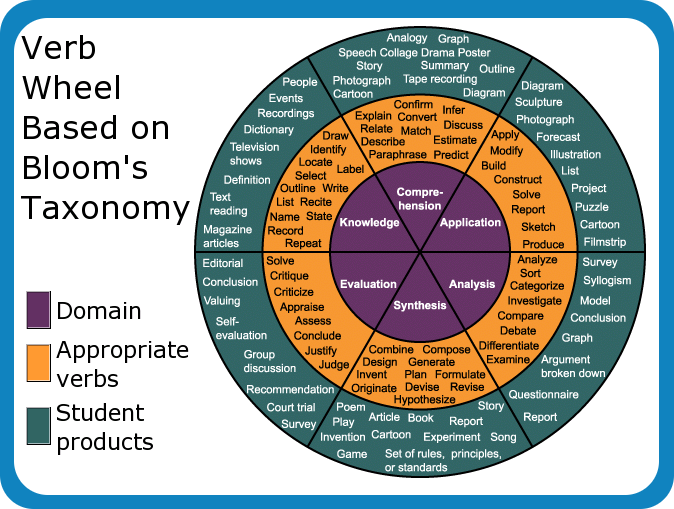
From your lesson objective, you have everything you need to put together a comprehensive lesson plan that will help kids master the standard.
Here are a few examples of Lesson Objectives that go along with an unpacked standard:
Standard (1st grade, CA, ELA): With guidance and support from adults, focus on a topic, respond to questions and suggestions from peers, and add details to strengthen writing as needed
- “Unpacked”:
- With guidance and support from adults focus on a topic to write about.
- Respond to questions from peers on their writing.
- Respond to suggestions from peers on their writing
- Add details to writing.
- Put all of the above together to strengthen writing.
Objective 1:
After this lesson students will be able to produce a short narrative focusing on a single topic including three main ideas/key details.
Objective 2:
After this lesson students will be able to listen and analyze peer feedback and make appropriate changes to their writing based on the feedback.
Objective 3:
After this lesson the student will be able to produce multiple drafts of a single piece of writing with each progressively improving, resulting in a polished final draft.
Sunday, May 4, 2014
The New Teacher Experience — Video Reflection
I really enjoyed watching The New Teacher Experience. Although it was focused on teachers at the secondary level and I will be working at the elementary level it provided some great insight in what to expect for my first year teaching.
Both of these teachers experienced a lot of the same emotions and feelings I would expect feeling the first year in my own classroom and it was very interesting to watch how they handled various situations.
Ms. Saray Felix — High School Science Teacher
For Ms. Felix’s first year she was challenged with a class in an urban school setting with many students who were retaking the class for the second or third time. I appreciated how she focused a lot of her attention in the beginning of the school year setting the environment. She spent a lot of time focusing on showing her students she cared as well as setting up her expectations for them. One thing she did in terms of classroom management that I would like to implement into my own classroom was having the class work together to come up with their own set of rules and consequences for classroom behavior. This provides the students with a say and will hopefully encourage them to follow the rules more than if they were just provided for them. It will also hopefully set up an environment where the students will help keep each other accountable. One thing she struggled with was keeping the students engaged, at least with the board work at the beginning of class. Bored students lead to worse classroom behavior. I liked that her mentor pointed this out to her and that she was able to correct this mid year to help with some of the behavior issues.
Mr. Alex Torres — High School Math Teacher
Mr. Torres is a very passionate math teacher. I liked that he worked very hard to show the students how math applied to every day life instead of just how to do it. He really made an effort to connect to his students. He spent the first part of the school year focusing on a fun learning environment, but failed to set up the appropriate classroom structure. Towards the end of the year you could see students taking advantage of his lax classroom and not paying attention or talking while he was teaching. At one point he said he tried to implement rules but they didn’t work so he didn’t follow through. This tarnished his credibility with the students as an adult and someone to respect and listen to in the classroom. I liked that with the help of his mentor he was able to recognize this. He created a plan for the next school year to provide the students with more immediate feedback by reflecting at the end of each class how the day went. I really like the approach and think it is something I might try and implement in my classroom, perhaps not every day but once a week. He also realized the importance of setting his students up to respect everyone when one student didn't feel comfortable presenting to the class because no one was paying attention.

I came across an interesting article written by Ellen Moir, “Phases of
First-Year Teaching”. Interestingly enough while watching The New
Teacher Experience you could see the Ms. Felix and Mr. Torres go
through these exact phases (Moir, 2011).
- Anticipation
- The feeling felt towards the end of student teaching. The individual becomes very excited and anxious about starting their first year in their own classroom.
- Romanticize the act of being a teacher with an idealistic goal of making a difference.
- Survival
- Experienced the first month of School.
- The teacher realizes how much work it really takes to accomplish everything and just does anything they can to survive.
- Mr. Torres and Ms. Felix mentioned this when talking about all of the meetings they had to attend (The New Teacher Experience.)
- Disillusionment
- After the first couple of months the new teacher begins to realize things aren’t going as well as originally planned.
- At this point classroom management becomes a major issue.
- Characterized by self-doubt and questioning their professional commitment.
- Rejuvenation
- After the holiday break teachers come back rested and ready to tackily the second half of the year.
- They feel more prepared and probably spent the majority of their break preparing curriculum and teaching strategies.
- Reflection
- At the end of the year, this is time to reflect on how the first year went and make plans for how to tackle the upcoming year.
- Critical phase to implement changes and really evaluate how to put together a betting functioning classroom.
- Anticipation
- Excitement for the new year!
- Feeling more prepared and ready to make this year better than the last.
I love that this outline really shows the ups and downs of first year teaching. I think it is great to go into the year prepared for whats a head so you do not burn out like many other teachers do. Even begging aware of these experiences going into student teaching will help to understand that not everything is going to be smooth sailing and it is ok to stumble here and there as long and you are learning from your mistakes and are constantly trying to improve!
References:
Moir, Ellen. "Phases of First-Year Teaching." Home. California Department of Education, 17 Aug. 2011. Web. 4 May 2014. <http://www.newteachercenter.org/blog/phases-first-year-teaching>.
"The New Teacher Experience." Teaching Channel. N.p., n.d. Web. 4 May 2014. <https://www.teachingchannel.org/videos/new-teacher-experience>.
References:
Moir, Ellen. "Phases of First-Year Teaching." Home. California Department of Education, 17 Aug. 2011. Web. 4 May 2014. <http://www.newteachercenter.org/blog/phases-first-year-teaching>.
"The New Teacher Experience." Teaching Channel. N.p., n.d. Web. 4 May 2014. <https://www.teachingchannel.org/videos/new-teacher-experience>.
Sunday, April 27, 2014
My Biggest Fears
For one of our assignments this week we were asked to reflect on our biggest fears about managing the learning environment.
I think this is a very valid concern and an important area to look at, because personally this is probably one of my biggest fears about being in my own classroom.
What if the student's don't listen to me? What if they don't take me seriously? What if they don't learn anything the entire year because of this?
When looking into the future at what my classroom will be like, my biggest wish is that I can create a supportive yet authoritative relationship with my students. I want them to feel comfortable coming to me and know that I am there for them, but at the same time respect me and my commands.
I know that I thrive on structure and I think I will do very well creating a structured learning environment with procedures for almost everything! I do worry though that I will create a structure that really doesn't work and then have to recant it. Will that create distrust with my students? Will they see my flaw and take advantage? I know as new teacher that many of my procedures probably won't work perfectly the first time. Even if I do have a "perfect" procedure it may not be a good fit for my particular students. As the title of our Prezi this week said, "It is a Balancing Act!".
I think going into my first year teaching with an understanding that it is a balancing act will help; it will take time and flexibility to find the balance. I will need to have patience with myself as well as my students. I hope to create an environment where we can work together to form this relationship and procedures that work for all of us.
Hopefully through my student teaching I will be able to observe multiple situations where my mentor teacher has to flex her command and take control of the class. I feel that these observations will be most important, more beneficial even than reading books on the topic.
I don't expect my first year to be perfect, my only hope is that my students finish the end of the year with knowledge and excitement for learning more. Only time will tell!
I think this is a very valid concern and an important area to look at, because personally this is probably one of my biggest fears about being in my own classroom.
What if the student's don't listen to me? What if they don't take me seriously? What if they don't learn anything the entire year because of this?
When looking into the future at what my classroom will be like, my biggest wish is that I can create a supportive yet authoritative relationship with my students. I want them to feel comfortable coming to me and know that I am there for them, but at the same time respect me and my commands.
I know that I thrive on structure and I think I will do very well creating a structured learning environment with procedures for almost everything! I do worry though that I will create a structure that really doesn't work and then have to recant it. Will that create distrust with my students? Will they see my flaw and take advantage? I know as new teacher that many of my procedures probably won't work perfectly the first time. Even if I do have a "perfect" procedure it may not be a good fit for my particular students. As the title of our Prezi this week said, "It is a Balancing Act!".
I think going into my first year teaching with an understanding that it is a balancing act will help; it will take time and flexibility to find the balance. I will need to have patience with myself as well as my students. I hope to create an environment where we can work together to form this relationship and procedures that work for all of us.
Hopefully through my student teaching I will be able to observe multiple situations where my mentor teacher has to flex her command and take control of the class. I feel that these observations will be most important, more beneficial even than reading books on the topic.
I don't expect my first year to be perfect, my only hope is that my students finish the end of the year with knowledge and excitement for learning more. Only time will tell!
Thursday, April 10, 2014
Classroom Rules, Standards and Procedures
As I have not had any experience working in my own classroom many of the following procedures are based on research I have done as well as what I can picture working. Of course I am fully expecting to re-evaluate these procedures and rules at regular time intervals throughout my teaching career as they might not work at all, or what works with one class might be horrible for another.
Standards and Rules:
I really like the idea presented by McLeod, Fisher and Hoover (81-82) about working with your students to come up with a set of Rules and Standards for the classroom. I plan on doing this the first day of school with my future classes. I will ask the students to come up with rules that they think will help contribute to a safe and productive learning environment for everyone. Depending on the age of my students we will either work together to group the similar ones together, or I will do it myself and then we will evaluate those groups and come up with phrases the represent all of them; I will limit these to about 5. We will also work as a group to be sure these are phrased in a positive tone, avoid using words like "can't" and "won't" This ensures that we come up with general standards that will apply to a multitude of situations in the classroom. It will also create a structure in which the students will be more motivated to follow these rules and standards because they played a crucial role in creating them. It empowers them, instead of always being told what to do. Of course I will also introduce the school rules and rules for general safety while at school.

Procedures:
Marzano (124) listed out categories teachers should be prepared to have procedures for in order to run a successful classroom. I have listed these categories below.
- General Classroom Behavior
- Beginning and Ending of the School Day or the Period
- Transitions and Interruptions
- Use of Materials and Equipment
- Group Work
- Seatwork and Teacher-Led Activities
I know that I will want to incorporate the following procedures into my classroom routine:
Entering the Classroom:
- I will greet my students at the door each morning.
- As students enter the classroom they will say good morning and then walk slowly while in the classroom.
- They will place their backpacks and coats on the hooks below their cubbies, or wherever the designated areas for those are in the classroom.
- They will then proceed to their mailbox and collect anything that has been returned to them.
- They will then go to their assigned seat and being the morning work that is on the board.
- If they finish their work before class begins they will be able to take out their assigned reading and read quietly at their desks.

Leaving the Classroom:
- The routine will be that my students are not dismissed by the bell, but by me.
- I would like to do the same activity at the end of everyday like recognizing exception students or some sort of wrap up activity that has a social focus to bring us closer as a group.
- Once this activity is completed students will be dismissed by group to go collect their backpacks.
- They will bring their backpacks back to their tables and pack up the thing they will need to go home.
- They will then be dismissed by group again to line up at the door
- I will wait by the door to say goodbye to each student as they leave the classroom.

Using the Restroom
- I would like to have an open policy for using the restroom, but also include a way to track which kids have gone and when.
- I will teach the students a hand signal, like a raised hand with their fingers crossed.
- I will acknowledge them at which point they will go over to the bathroom clipboard and place a check next to their name.
- I will have a policy that if it is an emergency they will be allowed to get up and go without asking, but of course if this begins to be abused we will need to reevaluate.
- I will monitor the clipboard to determine if anyone is going excessively, or if it is even necessary to keep the clipboard as the year goes on.

It is difficult for me to say that any of these are non-negotiable because I do not feel that I have enough experience to know for sure. I think I have more of the teacher style of starting out the year with an idea of what I like, but really molding those ideas to fit in with the students in my class. I would rather not spend my school year trying to fit square pegs into round holes. I would like to be flexible in the sense that things can change and evolve, but I will still maintain a very structured classroom with procedures and rules for everything necessary.
References:
Marzano, R.J. (2007). The Art and Science of Teaching. Retrieved from http://www.teachnowprogram.com/get_help_resources/activity_resources/module4/The_Art_and_Science_of_Teaching.pdf
McLeod, Joyce, Jan Fisher, and Ginny Hoover. The Key Elements of Classroom Management: Managing Time and Space, Student Behavior, and Instructional Strategies. Alexandria, VA: Association For Supervision and Curriculum Development, 2003. Retrieved from http://www.teachnowprogram.com/get_help_resources/activity_resources/module4/The_Key_Elements_of_Classroom_Management.pdf
Sunday, April 6, 2014
Subscribe to:
Posts (Atom)